Basic Information
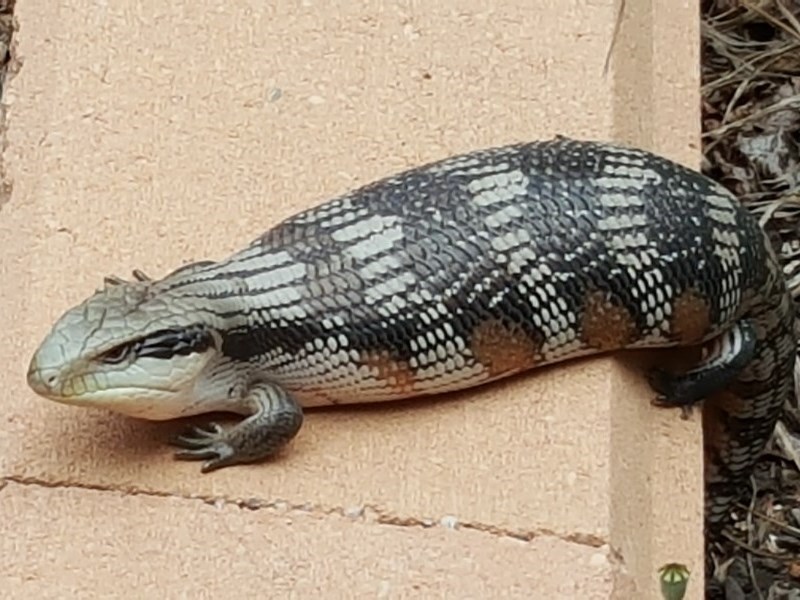
| Blue-tongue lizard (Tiliqua scinoides) | |
|---|---|
| Description | Body pale grey-brown on the back with several cross stripes. Blue tongue. |
| Dimensions | Up to 30 cm long (snout-vent). |
| Biology | Eastern Blue-tongues feed on a variety of plant and animal species, such as snails, fruits and flowers. They will open their mouth, extend their tongue, and hiss when threatened. Females give birth to up to 12 live young. |
| Habitat | Coastal regions, montane areas and sclerophyll forests. |
| Native status | Native to Australia |
| Diet | Omnivore |
| Distribution | Central and eastern mainland Australia. |
| Behaviour | Diurnal |
Atlas of Living Australia entry
Habitat requirements1
- Tussocky grasses
- Leaf litter
- Hiding places (rocks/logs)
- Open ground for basking
- Away from busy roads!
Design requirements1
- Low-storey (<50cm) vegetation
- Rocks or logs nearby for shelter and nesting
- Road underpasses and/or low traffic roads
Further Reading
Souter, N.J., Bull, C.M., Lethbridge, M.R., and Hutchinson, M.N. 2007. “Habitat Requirements of the Endangered Pygmy Bluetongue Lizard, Tiliqua adelaidensis.” Biological Conservation 135: 33-45.