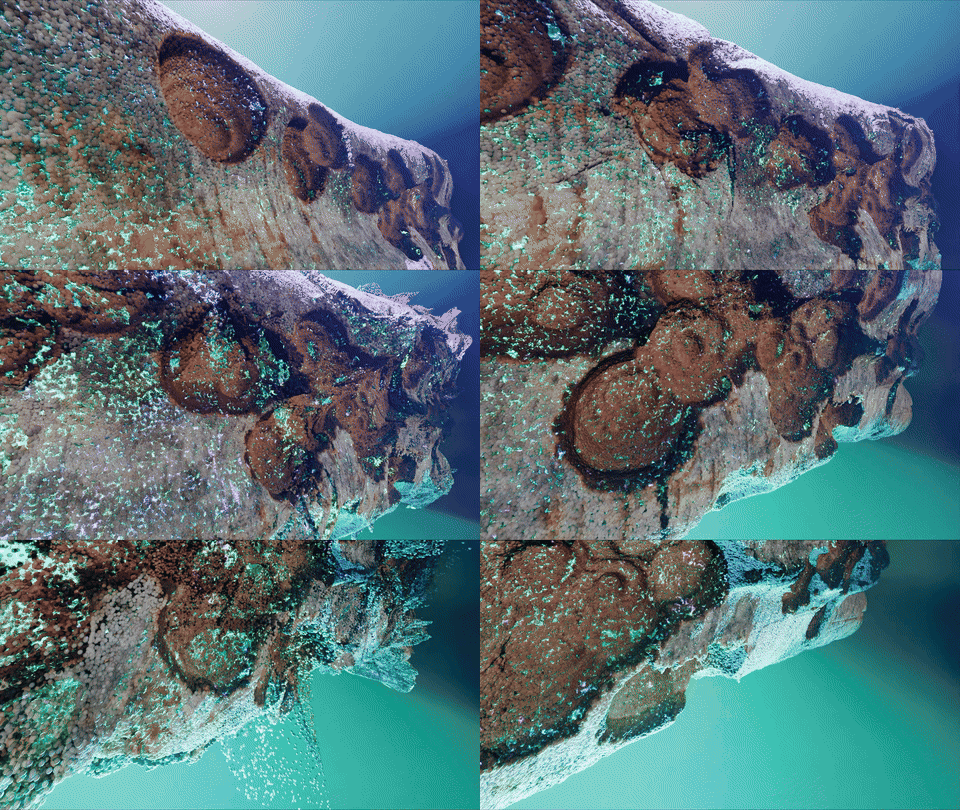
 The project’s aim is to create a network of prototype ‘more-than-human habitats’ that will demonstrate how to foreground biodiversity repair and regeneration at Fishermans Bend. Developing a holistic approach to urban design and development, that builds networks and corridors of biodiversity habitats, traced across the post-industrial urban terrain of Fishermans Bend. Each prototype habitats will help to articulate new forms of architecture and urban design which are beyond our existing human-centred approaches.
A design-based research project by:
Melbourne School of Design (MSD) at The University of Melbourne, Digital Design and Fabrication Electives, Masters of Architecture
In collaboration with the Advanced Digital Design and Fabrication (ADD+F) Research Hub
Funded by Creative Futures Funds and through FB IDEAs, supported by the Victorian State Government
Using this site
Outcomes showcases the work of DF_Lab and SI_Lab students, which used this website as a resource. The Overview page describes the collaboration between the subjects.
Fishermans Bend provides an overview of the site’s Indigenous and colonial history, its current status as a site for urban renewal, and its future as a biodiverse urban ecology.
Stakeholders contains profiles for the seven target species identified in the Fishermans Bend.
Precedents is a growing library of more-than-human design interventions with descriptions of their relevance to these species.
Resources contains bibliographies about More-than-human design, official reports about Fishermans Bend, and an overview of the Data that is most relevant to non-humans.
Design introduces the basic requirements of non-human species and the threats that urban environments like Fishermans Bend present to their wellbeing. It also offers some Design ideas that extend the more conservative recommendations in the Biodiversity Report.
Typologies are stubs that identify sites of interest and typologies like columns, power poles, and trees that represent opportunities for design interventions. Over time, they will be populated with detailed information.
Disclaimer
This resource is under continuing development. It draws heavily on the excellent work of ICON Science, who prepared the Fishermans Bend Urban Ecology Strategy Biodiversity Report (2019).